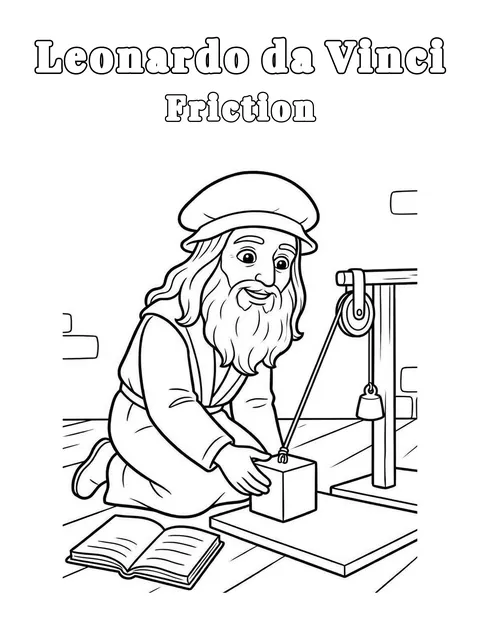
Friction: The Force That Slows Things Down
The Hook
Rub your hands together quickly. Feel that? Your hands get warm. Now think about this: where did that warmth come from? You didn't add any heat — you just moved your hands. The heat appeared from nowhere, out of simple rubbing. That mysterious warmth is friction — and it is one of the most important forces in your daily life. Without friction, you couldn't walk, cars couldn't stop, and pencils couldn't write. But with too much friction, machines wear out and energy is wasted. Understanding friction means understanding why the world feels the way it does.
What Is Friction?
Friction is a force that resists motion when two surfaces slide against each other. Even surfaces that look perfectly smooth are covered in microscopic mountains and valleys. When two surfaces touch, these tiny bumps catch on each other, gripping and resisting any sliding motion. The harder two surfaces press together, the more their bumps interlock, and the stronger the friction. This is why it's harder to slide a heavy box than a light one — more weight means the surfaces press together more tightly. Friction always acts in the opposite direction to motion. If you slide to the right, friction pushes to the left. It is always trying to slow things down or stop them from moving in the first place.
Friction is Both Helpful and Frustrating
Friction is why your shoes grip the ground when you walk — without it, every step would send you slipping. It's why car brakes work — brake pads press against spinning wheels and friction slows them. It's why you can hold a pencil, tie a knot, or climb a rope. But friction is also why engines need oil — metal parts sliding against each other without lubrication would grind each other down in minutes. It's why sliding down a rope too fast burns your palms. Engineers spend enormous effort managing friction: adding it where you need grip, reducing it where you need efficiency. Ball bearings, lubricants, special coatings, and air cushions are all ways humans have learned to control it.
Connection to Your World
In an electrical circuit, wires have something called electrical resistance — which is actually friction for electrons. Just as rubbing your hands creates heat, electrons pushing through a wire with resistance create heat too. That's how a light bulb works: electrons are forced through a very thin wire with high resistance, and the friction-like resistance makes it glow hot. When a spacecraft re-enters Earth's atmosphere, the air creates so much friction against the spacecraft's surface that the outside heats to thousands of degrees — which is why reentry vehicles need special heat shields. Friction is in everything.
Wonder Question
If there were no friction anywhere — no grip, no resistance, no slowing — what would the world feel like? Could you walk? Could anything stay still?